Best Ways to Save Money in Hong Kong: 47 Real Tips on Transport, Food, Shopping and Free Things Nobody Tells You About
Hong Kong has a reputation as one of Asia's most expensive cities. That reputation is earned - if you stay in a Central hotel, eat at Western restaurants, and take taxis everywhere. But most people visiting Hong Kong do exactly those three things without realising there are direct, specific alternatives for every single one that cost dramatically less.
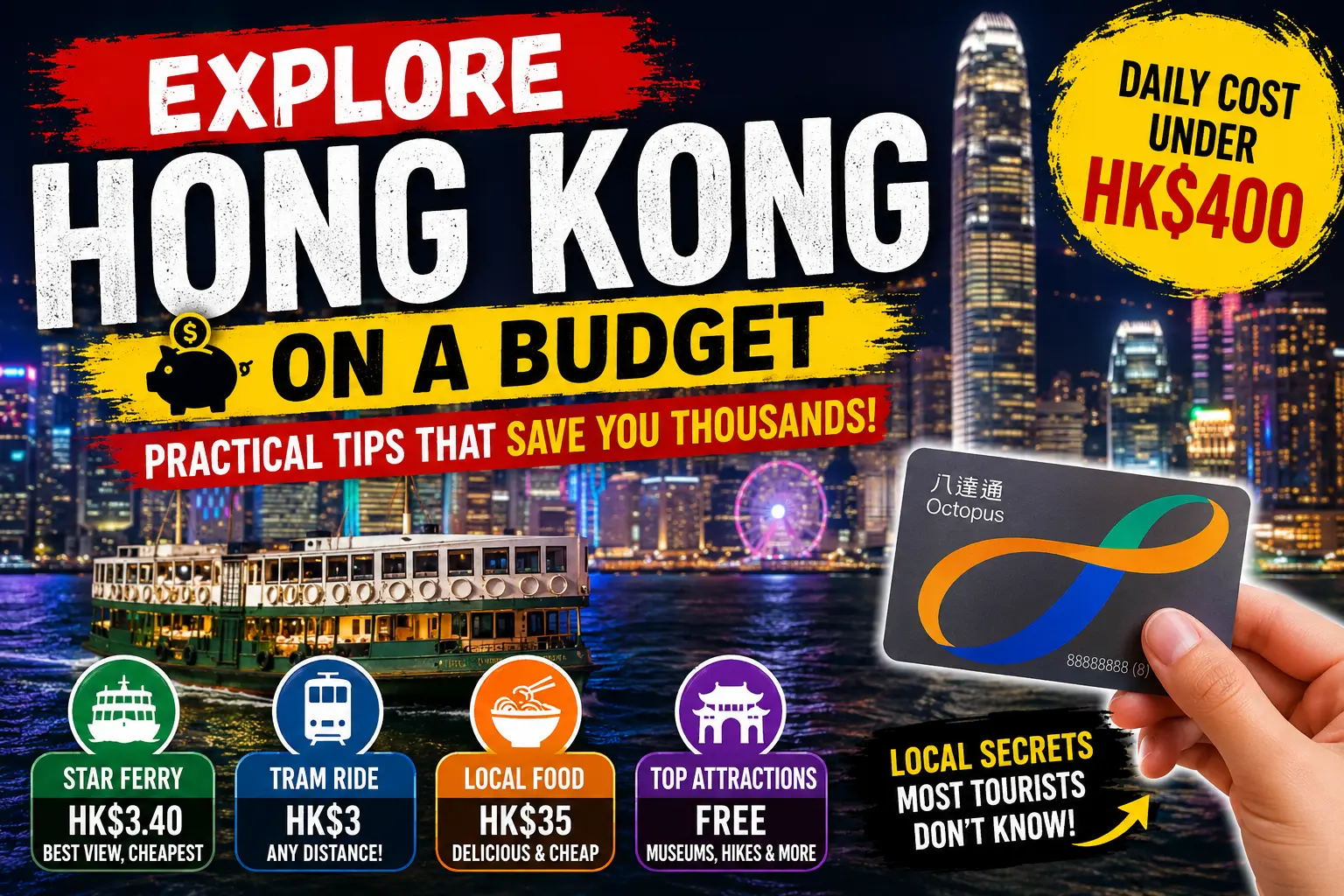
The Star Ferry from Tsim Sha Tsui to Central costs HK$3.40. The MTR Cross-Harbour Tunnel costs HK$9.40 for the same journey. Both take about 10 minutes. Nobody tells you that the Ferry is six dollars cheaper AND gives you the best view of Victoria Harbour you will get on any budget. Or that the Hong Kong tram - the double-decker red ones you see everywhere on Hong Kong Island - covers the entire northern shore of the island from Kennedy Town to Shau Kei Wan for a flat HK$3, regardless of how far you travel.
This guide is built around the specific gaps that most Hong Kong budget tips guides skip: the exact HK dollar price comparisons between tourist options and local options, the specific streets and areas where cheap food concentrates, the free activities that are genuinely good (not just cheap), and the tourist traps to avoid in each category. If you follow the strategies in this guide, a day in Hong Kong can comfortably cost under HK$400 including transport, three meals, and at least one attraction - with money left over.
How Much Money Do You Actually Need Per Day in Hong Kong?
Before getting into specific tips, here is a realistic daily cost breakdown for a solo traveler on a careful Hong Kong budget:
| Category | Budget Option | How to Keep It Low |
| Breakfast | HK$15-35 | Cha chaan teng (tea restaurant) set breakfast: toast + egg + milk tea from HK$28. 7-Eleven egg sandwich: HK$15. Avoid hotel breakfast (HK$150-250). |
| Lunch | HK$35-60 | Cafe de Coral, Fairwood, or Maxim's fast food set lunch: HK$40-55. Wonton noodle shops: HK$35-45. Avoid the Causeway Bay/Central sit-down restaurants at lunch. |
| Dinner | HK$50-90 | Dai pai dong open-air stalls: HK$50-80 per person. Temple Street Night Market food stalls: HK$60-90. Congee shops open late, very cheap. |
| Transport | HK$20-40/day | Octopus card MTR fare: ~HK$8-20 per trip depending on distance. Cross-harbour ferry (Star Ferry): HK$3.4 (lower deck). Avoid taxis. |
| Drinks | HK$5-20 | Convenience store drinks (7-Eleven, Circle K): HK$6-10. Avoid hotel minibar. Herbal tea shops charge HK$8-12. |
| Attractions | HK$0-free | Victoria Peak: free (hike Lugard Road). Tian Tan Buddha: free entry on foot. Most museums: free on Wednesdays. Temples: always free. |
| Accommodation | From HK$200/night | Guesthouses in Mong Kok and Tsim Sha Tsui from HK$200. Avoid Wan Chai and Central hotels. Book 4-6 weeks ahead for lowest price. |
Total realistic budget day: HK$290-430 for a solo traveler covering all meals, transport, and a free or cheap activity. For comparison, a hotel breakfast alone at a mid-range property is HK$150-250. The gap between knowing local options and defaulting to tourist-zone services is enormous in Hong Kong.
How to Save Money on Transport in Hong Kong: The Octopus Card and Better Alternatives
Get an Octopus Card Before Anything Else
The single most important thing you can do on arrival in Hong Kong to save money in Hong Kong is get an Octopus card. Buy it at any MTR station (HK$150: HK$50 deposit + HK$100 stored value) or at the airport immediately after landing. Here is what most guides say about it - and what they miss:
- Standard Octopus card: refundable HK$50 deposit. Top up with cash at any 7-Eleven, Circle K, or MTR Add Value Machine. Gives you a discount vs single-journey tickets on every ride.
- MTR Fare Saver trick: Exit at designated MTR stations where participating shops (Wellcome, Park N Shop) are located. Tap your Octopus at the Fare Saver machine BEFORE your next journey. Get HK$2 off your next MTR trip. Free to use, just requires the extra tap.
- Octopus works at 7-Eleven, Circle K, McDonald's, most cha chaan tengs, Park N Shop, Wellcome - so you can use the same card for transport AND daily spending.
- Refund note: if you return the card within 90 days, a HK$9 service charge is deducted from your refund. Either use the card for over 90 days, spend it down below HK$10 before leaving, or keep it as a souvenir.
Now the transport options ranked from cheapest to most expensive - with what most guides ignore:
| Transport Option | Saving Strategy - How to Pay Less |
| MTR with Octopus Card | Octopus card gives HK$0.50-1 cheaper per trip than single-journey ticket. Use Monthly Pass or Octopus monthly add-on for commuters. MTR Fare Saver (exit at participating stores near stations) gives HK$2 off next trip. |
| Star Ferry - Tsim Sha Tsui to Central | HK$3.4 (weekday lower deck) - cheapest harbour crossing in Hong Kong. Same 10-minute journey as MTR Cross-Harbour Tunnel costs HK$9.40. Star Ferry saves HK$6 each time AND gives the best Victoria Harbour view in the city. |
| Hong Kong Tramways (Ding Ding) | Flat fare HK$3 for any distance. Travels the full northern Hong Kong Island from Kennedy Town to Shau Kei Wan - 30km for HK$3. Most scenic and cheapest way to cross Hong Kong Island. |
| Buses (KMB, CTB, NWFB) | HK$3.3-12 depending on route. Often cheaper than MTR for some cross-island routes. Octopus gives slight discount vs cash. Night buses (N-routes) cover most areas after MTR closes at 1AM. |
| Airport Express vs alternatives | Airport Express: HK$115 (from Central). Bus A21 from TST/Mong Kok: HK$33. Bus S1 to Tung Chung + MTR: HK$30 total. Saving: HK$85 per person. For a family of 4, that is HK$340 saved just on airport transport. |
| Taxis - when to avoid | Hong Kong taxis start at HK$27 and jump quickly. A Mong Kok to Central taxi costs HK$80-100. The same trip on MTR costs HK$9.40. Taxis are only worth it for late night (after 1AM) or when carrying heavy luggage. |
| Airport Express Travel Pass | HK$250 (single) or HK$350 (return). Includes 1-2 Airport Express rides + 3 days unlimited MTR and buses. Worth it if you plan 6+ MTR trips per day. If doing fewer trips, Octopus pay-as-you-go is cheaper. |
The Airport Express bus alternative is the biggest single-trip saving available. Four people travelling from the airport to Mong Kok save HK$340 by taking Bus A21 (HK$33 each) instead of the Airport Express (HK$115 each). Bus A21 takes 60-80 minutes to Mong Kok versus 40-50 for Express - the HK$82 per person saving is worth 20 extra minutes for most budget travelers.
Cheap Food in Hong Kong: Where Locals Actually Eat
The Cha Chaan Teng - Hong Kong's Original Budget Restaurant
The cha chaan teng is the most important word you need for cheap eating in Hong Kong. These are Hong Kong's own version of the diner - hybrid cafes that serve Western-influenced food in a Chinese fast-food style. They exist on almost every street, they are used by Hong Kong office workers for daily meals, and they are substantially cheaper than any Western restaurant or hotel dining.
What to order at a cha chaan teng: the 'set'. Breakfast set B or C gives you two items - usually buttered toast or egg + a hot drink. Lunch set gives a main rice or noodle dish, a soup, and a drink. Evening sets work similarly. These are the same meals that Hong Kong office workers eat every weekday. Prices have barely changed in years because competition is intense.
| Food Strategy | Real Prices and What to Order |
| Cha chaan teng | Hong Kong's own fast-food format. Breakfast set: toast with butter + fried egg + milk tea or coffee = HK$28-38. Lunch set: rice or noodle dish + soup + drink = HK$45-60. Locations everywhere - look for the yellow or red backlit menu boards. |
| Wonton noodle shops | Bowl of wonton noodles: HK$35-50. One of Hong Kong's most iconic foods and cheapest sit-down meals. Mak's Noodle in Central is famous (HK$52), but neighbourhood versions in Sham Shui Po and Yau Ma Tei are equally good for HK$35. |
| Congee shops | Large bowl of congee with toppings: HK$30-45. Stays open very late - some 24 hours. Good for budget late-night eating when most cheap restaurants close. |
| Supermarket meals (Park N Shop, Wellcome, CitySuper) | Park N Shop and Wellcome have prepared food sections - roast pork rice boxes, sushi, sandwiches - from HK$25-45. CitySuper is premium but has marked-down prepared food after 7PM. |
| Dai pai dong (open-air food stalls) | Open-air food stalls - HK's original street food culture. Cooked food centres in Wan Chai, Sheung Wan, and Sham Shui Po have the most affordable ones. Dinner for two: HK$100-160 total including beer. |
| Avoid tourist restaurant menus | Restaurants in Tsim Sha Tsui tourist zones and Central's IFC Mall charge 2-3x more for the same food. Walk one or two streets back from the tourist drag and prices drop immediately. |
The specific neighbourhoods for the cheapest food in Hong Kong:
- Sham Shui Po: Working-class neighbourhood with the highest concentration of cheap, genuine Hong Kong food. Rent is low, competition is high, portions are large. Best for wonton noodles, congee, and local snacks.
- Yau Ma Tei: Good mix of old-school noodle shops and tea restaurants near the Jade Market.
- Sheung Wan: Local residential area on Hong Kong Island with cheap restaurants and a few surviving dai pai dongs.
- Avoid: Central IFC Mall food court, Causeway Bay main shopping streets, hotels in any area - these are the most expensive food locations in the city.
Free and Cheap Things to Do in Hong Kong
Hong Kong has more genuinely good free activities than most expensive cities. Here is what is worth your time - and the specific money-saving detail most guides leave out:
| Free/Cheap Activity | Details Most Guides Skip |
| Victoria Peak via Lugard Road hike | The Peak Tram (HK$108 return) is optional. Take Bus 15 from Central Exchange Square (HK$10.60) to the top. Or hike up Lugard Road from the Mid-Levels (45 minutes, free). Same panoramic view - HK$98 cheaper. |
| Museums free on Wednesdays | Hong Kong Museum of History, Hong Kong Science Museum, Hong Kong Heritage Museum, Hong Kong Museum of Art - all free admission every Wednesday. Normal cost: HK$20-30 each. Plan your cultural day for Wednesday. |
| Tian Tan Buddha (Lantau) | The Buddha statue and Po Lin Monastery are free. The cable car (HK$185 return) is optional - Bus 23 from Tung Chung MTR (HK$20.50) gets you there without the cable car price. |
| Dragon's Back hike | Free. Rated one of Asia's best urban hikes. Takes 2-3 hours. Start at Shek O Road bus stop (Bus 9 from Shau Kei Wan MTR, HK$6.80). Ends at Shek O Beach - swim and eat at the village. |
| Temple Street Night Market | Free to browse. Street food from HK$20-50. Fortune tellers, live Cantonese opera performances (free). Best time: 7PM to 11PM. Compare prices at 3+ stalls before buying anything. |
| Cheung Chau Island day trip | Ferry from Central Pier 5: HK$16.30 (slow ferry, 55 minutes). Rent a bicycle on the island for HK$40/day. Eat fresh seafood at open-air restaurants from HK$80/dish. Full day trip for under HK$300. |
| LCSD free swimming pools | Hong Kong Leisure and Cultural Services Department (LCSD) runs government swimming pools for HK$19/session. Open May to October. Kennedy Town, Victoria Park, Tsuen Wan - most districts have one. |
The Victoria Peak vs Bus 15 example is the most common overspend in Hong Kong. The Peak Tram is a genuine Hong Kong icon, but at HK$108 return per person, a family of four pays HK$432 for a 12-minute ride that Bus 15 does for HK$42 total. The view from the Peak Tram car is nice. The view from the Peak itself is identical regardless of how you got there. Bus 15 from Central Exchange Square takes 35 minutes. It is a scenic road, not a punishment.
Shopping Cheap in Hong Kong: Where Locals Go and What to Avoid
| Shopping Category | Where to Buy Cheap in Hong Kong + Warnings |
| Electronics - where to buy safely | Broadway, Fortress, and Citicall are authorised chain retailers with fixed prices and genuine warranty. AVOID solo shops on Nathan Road - common tourist traps with inflated prices and fake warranty terms. Sham Shui Po Golden Computer Centre for second-hand electronics. |
| Clothes and fashion | Mong Kok Ladies Market (Temple Street) for bargain clothes - HK$50-150 per item. Sham Shui Po for fabric and wholesale clothing. Causeway Bay and Mong Kok have outlet sections of major brands. |
| Cosmetics and beauty | Sa Sa, Bonjour, Colourmix for Korean, Japanese, and international beauty products - usually cheaper than in their home countries due to Hong Kong's zero import duty. Compare prices across Sa Sa branches (different districts sometimes have different stock). |
| Duty-free shopping note | Hong Kong charges zero customs duty on most goods including electronics, cosmetics, and clothing. The prices you see at regular stores in Hong Kong ARE essentially duty-free prices - you do not need to buy at the airport. |
| Haggling - when it works | Night markets and small independent stalls: haggling is expected. Fixed-price chain stores (Sa Sa, Broadway, 7-Eleven): haggling is pointless. Start at 60-70% of the first quoted price at market stalls. |
Sham Shui Po deserves its own mention as Hong Kong's best kept budget shopping secret. This working-class Kowloon neighbourhood has:
- Golden Computer Arcade and Computer Centre: second-hand electronics, cables, accessories, and tech components at wholesale prices.
- Apliu Street flea market: second-hand electronics, vintage items, curiosities.
- Wholesale fabric and clothing streets: if you are buying quantities or getting clothing made.
- Multiple cheap restaurants and cha chaan tengs with lower prices than Mong Kok or TST.
Cheap Accommodation in Hong Kong: Where to Stay on a Budget
Which areas have the cheapest hotels in Hong Kong?
The area you stay in affects your hotel price more than any other factor in Hong Kong. Here is the honest geography of hotel pricing:
- Cheapest: Mong Kok and Sham Shui Po - guesthouses from HK$200/night. MTR-connected to everywhere. Busy and loud at night, but central and affordable.
- Mid-range starting point: Jordan and Yau Ma Tei - better quality budget hotels from HK$350/night. Good MTR connections.
- Avoid for budget: Central, Admiralty, Sheung Wan, Wan Chai hotel zones - same room quality costs HK$500-800 more per night purely because of the postcode.
- Book 4-6 weeks ahead for lowest prices. Same-week booking in Hong Kong usually pays premium, not discount.
Currency Exchange in Hong Kong: Where to Change Money for the Best Rate
Hong Kong is one of the best cities in Asia for currency exchange rates. Here is how to get the most Hong Kong dollars for your money:
- Best rates: Chungking Mansions in Tsim Sha Tsui has licensed money changers offering the best exchange rates for most currencies. Compare at 3-4 counters before exchanging - rates vary by counter even inside the same building.
- Also good: licensed money changers on Granville Road and Nathan Road (Tsim Sha Tsui). Look for the HKSAR government licence posted on the counter.
- Avoid airport exchange counters - rates are the worst in Hong Kong. Only change enough at the airport to get your Octopus card. Change the rest in the city.
- Credit card transactions: Visa and Mastercard have reasonable exchange rates for HKD transactions. Always choose to pay in HKD (not your home currency) when given the option - Dynamic Currency Conversion (DCC) at merchants adds 2-3% to every transaction.
Cheap SIM Cards and Data in Hong Kong
Data is cheap in Hong Kong. Here are your options from cheapest to most expensive:
- 7-Eleven tourist SIM: HK$48-98 for 3-8 days unlimited local data. Available immediately at any 7-Eleven including the airport. Cheapest per-day option for short visits.
- 3HK, SmarTone, China Mobile tourist SIMs: HK$58-128 for 5-30 days. Better coverage in rural areas and MTR tunnels than budget SIMs.
- eSIM option: Purchase before departure via apps like Airalo, or via Trip.com HK. No SIM swap needed. Price comparable to 7-Eleven physical SIM but activatable before landing.
- Avoid airport retail telecom counters for full-price SIM contracts - you are buying a tourist SIM, not a contract. 7-Eleven gives the same product for less.
Free Events and Festivals in Hong Kong Throughout the Year
- Lunar New Year: Free street performances, flower markets (free to browse, not required to buy), and lion dances across every major district. Most spectacular in Mong Kok and Yau Ma Tei.
- Dragon Boat Festival (Tuen Ng): Free to watch dragon boat races at Stanley, Aberdeen, and Tuen Mun beaches. June.
- Hong Kong Arts Festival: Multiple free outdoor performances and exhibitions in February-March.
- Mid-Autumn Festival: Free public lantern displays at Victoria Park, Tai Po, and the waterfront promenades. September.
- Christmas street decorations: Tsim Sha Tsui and Causeway Bay transform in December - free to walk through and photograph.
10 Practical Money Saving Tips for Hong Kong That Most Guides Skip
- The Star Ferry is not just cheap transport - it is one of Hong Kong's best experiences. HK$3.40 for a harbour crossing with skyline views beats any paid observation deck.
- Museums are free every Wednesday. Schedule your cultural day for Wednesday.
- Bus 15 to the Peak. Same view, HK$82 less than Peak Tram return per person.
- Bus 23 to Tian Tan Buddha (Ngong Ping). Same Buddha, HK$165 less than cable car return.
- Eat set lunches - the same restaurant that charges HK$120 for dinner often serves a complete set lunch for HK$55.
- Convenience store drinks - a can of juice at 7-Eleven is HK$7. The same can at a restaurant is HK$20-30.
- Happy hour at bars in Wan Chai and Lan Kwai Fong: 5PM-9PM. Draft beers HK$30-40 vs HK$70+ after happy hour.
- Buy Octopus card at airport station immediately. Do NOT exchange cash before leaving the airport for anything other than Octopus top-up.
- Sham Shui Po for everything cheap - food, electronics, clothing, hardware.
- Walk. Hong Kong is more walkable than its reputation suggests. Tsim Sha Tsui to Mong Kok is 20 minutes on foot - and free.
The Real Secret to Saving Money in Hong Kong
Hong Kong charges a huge premium for convenience - specifically the convenience of being in tourist-facing areas. The Peak Tram costs 30x more than Bus 15. The Airport Express costs 3.5x more than Bus A21. A hotel in Central costs 2-3x more than the same quality room in Mong Kok. A restaurant facing the harbour charges 3x a cha chaan teng two blocks away.
The actual city of Hong Kong - the one that 7 million residents use every day - is not expensive. It is densely packed with excellent, cheap food, incredibly efficient public transport, and free public space. The transport system is genuinely world-class at HK$9-15 per ride. The food is genuinely delicious at HK$35-60 per meal. The hikes are free, the beaches are free, the street life is free. The expensive version of Hong Kong is entirely optional. This guide exists to help you use the other version.
How to Save Money in Hong Kong: Frequently Asked Questions
Bus A21 costs HK$33 to Tsim Sha Tsui and Mong Kok - versus HK$115 for the Airport Express. For a family of 4, that is HK$328 saved. Takes about 60-80 minutes versus 40-50 minutes for Airport Express.
A realistic careful budget day in Hong Kong: HK$290-430 covering three meals (cha chaan teng or local restaurants), transport (Octopus card MTR/bus), and one free or cheap activity. Accommodation is separate - from HK$200/night in Mong Kok guesthouses.
Cha chaan teng breakfast sets from HK$28. Wonton noodle shops from HK$35. Supermarket prepared meals from HK$25. Congee from HK$30. Sham Shui Po neighbourhood has the cheapest restaurant concentration in Hong Kong.
Yes - many. Dragon's Back hike (free), Victoria Peak via Bus 15 (HK$10.60), Tian Tan Buddha via Bus 23 (HK$20), Hong Kong museums every Wednesday (free), Temple Street Night Market (free to browse), Cheung Chau Island (ferry HK$16.30 each way).
Mong Kok and Sham Shui Po have the cheapest guesthouses - from HK$200/night - with direct MTR access. Avoid hotels in Central, Admiralty, and Wan Chai hotel zones where the same quality room costs HK$500-800 more.
About the Author

Rahul Verma
Rahul specializes in e-commerce trends and discount strategies to maximize your shopping experience. With 4+ years of experience, he provides expert insights on getting the best value for your money online.